

Chloroacetyl Chloride Uses in Pharma, Agrochemicals and Dyes
Home / Chloroacetyl Chloride Uses in Pharma, Agrochemicals and Dyes
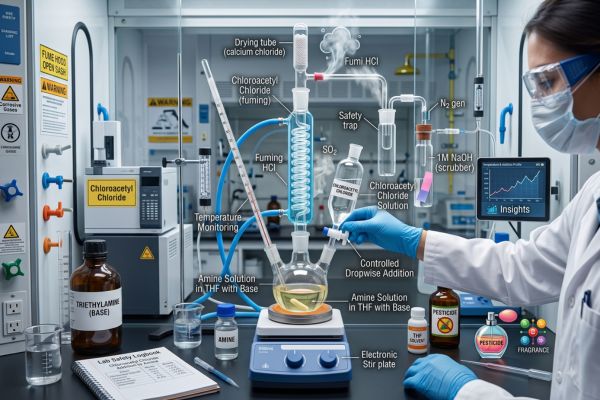
Chloroacetyl chloride uses make this compound essential for pharmaceutical, agrochemical, and dye industries worldwide. Chloroacetyl chloride (ClCH2COCl) is a specialized acid chloride combining two reactive functional groups: the acyl chloride and chlorine atom. This dual functionality makes chloroacetyl chloride an excellent intermediate for creating complex molecules in fine chemical synthesis. The compound appears as a clear, colorless to pale yellow liquid with a sharp odor and exceptional reactivity.
Understanding chloroacetyl chloride uses is critical for chemical manufacturers seeking efficient synthesis routes for high-value products. This compound enables the creation of pharmaceutical medications, agricultural crop protection products, and vibrant industrial dyes. From antibiotic synthesis to herbicide development, chloroacetyl chloride plays a vital role in modern chemical manufacturing across Ahmedabad and Gujarat.
This comprehensive guide explains chloroacetyl chloride uses, applications, sourcing strategies, and best practices for professional chemists and chemical manufacturers looking to maximize efficiency and product quality.
What Is Chloroacetyl Chloride and Its Dual Functional Importance
Chloroacetyl chloride is a specialized acid chloride with the chemical formula ClCH2COCl. It combines two highly reactive functional groups that make this compound uniquely valuable. The acyl chloride group (COCl) is highly reactive for acylation reactions. The alpha chlorine atom provides a second reactive site for nucleophilic displacement reactions.
This dual functionality makes chloroacetyl chloride an excellent intermediate for creating complex organic molecules. The compound has a molecular weight of 112.95 g/mol and boiling point of approximately 107°C. Chloroacetyl chloride is hygroscopic and must be stored in sealed containers to prevent reaction with atmospheric moisture. The presence of both functional groups provides multiple points for chemical reactivity making it exceptionally versatile for synthesis.
Chloroacetyl Chloride Properties and Characteristics
| Property | Value / Description |
|---|---|
| Chemical Formula | ClCH2COCl |
| Molecular Weight | 112.95 g/mol |
| Appearance | Colorless to pale yellow liquid |
| Boiling Point | ~107°C |
| Odor | Sharp, pungent |
| Reactivity | Dual reactive sites (acyl + alpha chlorine) |
| Solubility | Soluble in organic solvents |
| Hygroscopic | Yes – absorbs moisture |
| Functional Groups | Acid chloride + alpha chlorine |
Problem: Inefficient Synthesis Without Proper Acylating Agents
Pharmaceutical manufacturers face significant challenges when creating complex drug molecules without efficient intermediates. Many antibiotics and specialized pharmaceuticals require multiple functional groups that are difficult to install sequentially. Using traditional synthesis routes requires many steps, increasing costs and time.
The alpha chlorine atom in chloroacetyl chloride enables secondary reactions that would require separate protection-deprotection cycles with other reagents. This adds expense and complexity. Without chloroacetyl chloride, creating certain antibiotic derivatives requires inefficient multi-step syntheses costing significant time and resources.
Small pharmaceutical companies struggle to compete when lacking access to efficient intermediates like chloroacetyl chloride. Time-to-market delays affect profitability. Higher synthesis costs reduce margins on finished products.
Solution: Strategic Use of Chloroacetyl Chloride in Synthesis
The solution involves leveraging chloroacetyl chloride’s dual functionality to streamline synthesis routes. Using chloroacetyl chloride as a starting material reduces the number of synthesis steps needed. This lowers overall production cost and time.
The acyl chloride group rapidly reacts with nucleophiles under mild conditions. The alpha chlorine atom then undergoes nucleophilic displacement or elimination reactions. This two-step functionality reduces protection-deprotection cycles needed with other reagents.
Proper sourcing of high-purity chloroacetyl chloride ensures reliable synthesis with consistent yields.
Best Practices
- Source high-purity chloroacetyl chloride from certified suppliers
- Store in sealed containers under inert atmosphere when possible
- Maintain cool, dry storage conditions at 2-8°C
- Use dry solvents and glassware for all reactions
- Control reaction temperature carefully
- Add chloroacetyl chloride slowly to nucleophile solutions
- Monitor reactions using appropriate analytical methods
- Minimize exposure to moisture and humidity
Chloroacetyl Chloride Uses in Pharmaceutical Manufacturing
Pharmaceutical industry heavily relies on chloroacetyl chloride for producing various drug compounds. Antibiotic synthesis represents one of the most important applications, where chloroacetyl chloride is used in manufacturing penicillin derivatives. Anti-inflammatory drugs, antifungal agents, and anticancer intermediates all require chloroacetyl chloride in production routes.
Chloroacetyl Chloride Uses Across Pharmaceutical Applications
| Drug Category | Specific Applications | Synthesis Stage |
|---|---|---|
| Antibiotics | Penicillin derivatives, beta-lactams | Intermediate synthesis |
| Anti-inflammatory | Pain and fever reducers | Active ingredient creation |
| Antifungal | Fungal infection treatment | Intermediate synthesis |
| Anticancer | Oncology medication synthesis | Intermediate creation |
| Hormone Drugs | Steroid synthesis, hormone derivatives | Building block |
| Local Anesthetics | Dental and surgical applications | Intermediate synthesis |
- Essential intermediate in antibiotic synthesis
- Creates anti-inflammatory drug compounds
- Produces antifungal agents for medical use
- Synthesizes anticancer drug intermediates
- Forms hormone and steroid drug precursors
- Creates local anesthetic compounds
Agrochemical Applications of Chloroacetyl Chloride
In agriculture, chloroacetyl chloride serves as a key building block for crop protection products. Herbicide development benefits from chloroacetyl chloride as a starting material for selective weed control compounds. Insecticide synthesis uses chloroacetyl chloride for producing effective pest management chemicals.
Chloroacetyl Chloride in Agrochemical Production
| Agrochemical Type | Application | Agricultural Benefit | Synthesis Stage |
|---|---|---|---|
| Herbicides | Weed control | Increase crop yield | Direct synthesis |
| Insecticides | Pest management | Protect crops | Multi-step synthesis |
| Fungicides | Disease prevention | Reduce crop loss | Intermediate synthesis |
| Growth Regulators | Control plant development | Optimize growth | Derivative synthesis |
| Seed Treatments | Protective coatings | Improve germination | Custom synthesis |
Dye and Pigment Industry Uses of Chloroacetyl Chloride
The dye and pigment industry utilizes chloroacetyl chloride extensively to create vibrant, stable colorants. Reactive dyes produced using chloroacetyl chloride chemically bond to textile fibers creating durable color. Azo dyes represent a major class of synthetic colorants created using chloroacetyl chloride as an intermediate.
Chloroacetyl Chloride Uses in Dye Production
| Dye Type | Properties | Textile Application | Market Value |
|---|---|---|---|
| Reactive Dyes | Chemically bonded to fiber | Cotton, wool textiles | High |
| Azo Dyes | Intense color, diverse shades | Synthetic fabrics | High |
| Anthraquinone Dyes | Excellent lightfastness | Premium textiles | Very high |
| Disperse Dyes | For synthetic fibers | Polyester fabrics | Medium |
| Pigments | Paint, ink, coating base | Industrial coatings | Medium |
Safety Protocols and Handling Guidelines for Chloroacetyl Chlorideesis
Safety is critical when handling chloroacetyl chloride. This corrosive chemical can cause severe chemical burns to skin and serious damage to eyes. Vapor inhalation can irritate respiratory tissues causing breathing difficulties. Never handle without proper personal protective equipment and training.
Chloroacetyl chloride reacts violently with water producing heat and hydrogen chloride gas. Store only in sealed containers away from moisture. Maintain proper ventilation and work only under fume hoods.
Safety Checklist
- Always wear safety goggles and chemical-resistant gloves
- Work only under fume hoods with good ventilation
- Keep water and moisture completely away
- Store in sealed containers in cool, dry locations
- Never mix with bases, water, or incompatible chemicals
- Have emergency eyewash and safety shower available
- Know proper spill cleanup procedures
- Report all accidents and near-misses immediately
Frequently Asked Questions (FAQ)
Why is chloroacetyl chloride better than other acylating agents for pharmaceutical synthesis?
Chloroacetyl chloride’s dual functionality (acyl chloride + alpha chlorine) provides advantages over single-function reagents. The alpha chlorine enables secondary transformations without additional protection steps. Reactions occur rapidly at mild conditions without catalysts. This reduces synthesis complexity and cost compared to using multiple separate reagents.
How do I properly store chloroacetyl chloride in my facility?
Store chloroacetyl chloride in sealed glass or polyethylene containers away from all moisture sources. Maintain storage temperatures between 2-8°C in cool, dry locations. Use containers with inert atmosphere (nitrogen or argon) when possible. Keep away from bases, water, and incompatible chemicals. Ensure storage areas have good ventilation and emergency equipment nearby
What are the main challenges with chloroacetyl chloride handling?
The primary challenge is moisture sensitivity. Even trace water causes hydrolysis, destroying the reagent and producing corrosive hydrogen chloride gas. Strict anhydrous conditions are essential. The compound’s reactivity with bases requires careful separation from alkaline storage areas. Proper training and safety equipment are non-negotiable.
Can chloroacetyl chloride be used for herbicide synthesis?
Yes, chloroacetyl chloride is widely used in herbicide synthesis. The compound serves as a key intermediate for creating selective weed control compounds. The dual functionality enables efficient synthesis of herbicide structures. Many commercial herbicides incorporate chloroacetyl chloride derivatives in their synthesis routes.
What quality standards should I verify when sourcing chloroacetyl chloride?
Request certificates of analysis verifying purity above 98%. Verify water content is below 500 ppm to ensure minimal hydrolysis. Check for acid chloride content, chlorine content, and absence of hydrochloric acid. Ensure suppliers follow ISO certifications and conduct regular batch testing. Quality assurance is critical for consistent pharmaceutical and agrochemical production.
Is chloroacetyl chloride used in cosmetics or personal care products?
While not directly used in final products, chloroacetyl chloride serves as an intermediate in synthesizing preservatives and UV absorbers used in cosmetics. The compound’s reactivity makes it suitable for creating specialized cosmetic ingredients. Always verify regulatory compliance for specific cosmetic applications in your region.