

What Are Chemical Intermediates? Uses, Types & Applications in Pharma & Agriculture
Home / What Are Chemical Intermediates? Uses, Types & Applications in Pharma & Agriculture
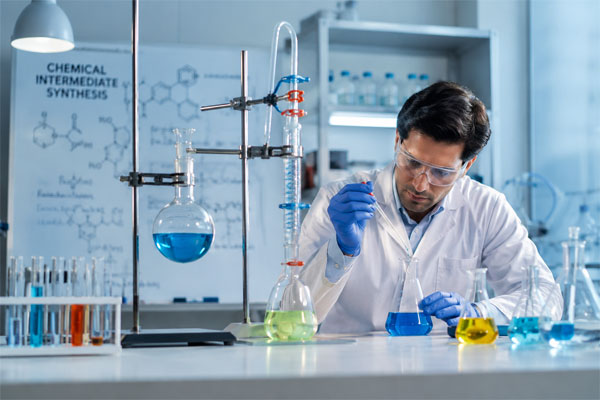
What Are Chemical Intermediates? Uses, Types & Applications in Pharma & Agriculture
If you’ve ever wondered how medicines, pesticides, or industrial chemicals are made, the answer almost always involves chemical intermediates. These compounds are the unsung heroes of modern manufacturing — essential building blocks that transform raw materials into the products that power healthcare, agriculture, and industry.
In this detailed guide, we’ll explain what chemical intermediates are, explore their different types, and dive into their critical applications across pharmaceutical, agricultural, and industrial sectors.
What Are Chemical Intermediates?
A chemical intermediate is a substance that is produced during a chemical synthesis process and is used as a starting material or reagent in the next step of the reaction. Intermediates are not the final product — they are the stepping stones between raw materials and finished chemicals.
Simple Analogy:
Think of baking a cake. Flour, eggs, and sugar are your raw materials. The batter is your intermediate — it’s not the final cake, but you can’t make the cake without it. Similarly, chemical intermediates are essential compounds that are processed further to create medicines, pesticides, dyes, plastics, and more.
Technical Definition:
In chemistry, an intermediate is a molecular entity formed from the reactants that reacts further to give the products of a chemical reaction. In industrial manufacturing, intermediates are commercially traded compounds used as inputs in multi-step synthesis processes.
Types of Chemical Intermediates
Pharmaceutical Intermediates
These are compounds used in the synthesis of Active Pharmaceutical Ingredients (APIs) — the biologically active components in medicines.
Examples:
- Chloroacetyl Chloride (used in antibiotic and anti-inflammatory drug synthesis)
- Beta-lactam intermediates (for penicillin and cephalosporin antibiotics)
- Amino acid derivatives (for peptide drugs)
Agrochemical Intermediates
These intermediates are used to manufacture crop protection chemicals including pesticides, herbicides, fungicides, and insecticides.
Examples:
- Chlorinated Toluene derivatives (for herbicide manufacturing)
- Phosphorus-based intermediates (for organophosphate pesticides)
- Triazine intermediates (for herbicide formulations)
Dye and Pigment Intermediates
Used in the production of synthetic dyes, pigments, and colouring agents for textiles, printing, plastics, and paints.
Examples:
- H-acid and J-acid (for reactive dyes)
- Aniline derivatives (for azo dyes)
- Naphthalene derivatives (for pigment production)
Polymer and Plastic Intermediates
These compounds serve as monomers or additives in the production of polymers, plastics, and synthetic materials.
Examples:
- Styrene (monomer for polystyrene)
- Vinyl chloride (monomer for PVC)
- Adipic acid (for nylon production)
Key Applications of Chemical Intermediates
Application 1: Pharmaceutical Manufacturing
Chemical intermediates are the backbone of the pharmaceutical industry. The journey from a raw chemical to a life-saving medicine involves multiple synthesis steps, each requiring specific intermediates.
How it works:
“`
Raw Materials → Intermediate 1 → Intermediate 2 → API → Final Drug Formulation
“`
For example, the production of a common antibiotic might involve:
- Starting with a basic organic compound
- Reacting it with Chloroacetyl Chloride (an intermediate) to introduce an acyl chloride group
- Further reactions to build the complete molecular structure
- Purification to obtain the final API
India’s pharmaceutical industry — responsible for over 20% of global generic drug production — consumes massive quantities of chemical intermediates, making it one of the largest markets worldwide.
Application 2: Agriculture and Crop Protection
Modern agriculture depends heavily on chemical crop protection products. Agrochemical intermediates are used to synthesize:
- Herbicides — to control weeds (e.g., glyphosate intermediates)
- Insecticides — to protect crops from pests (e.g., pyrethroid intermediates)
- Fungicides — to prevent crop diseases (e.g., triazole intermediates)
With the global population growing and arable land decreasing, the demand for efficient crop protection chemicals — and the intermediates used to make them — continues to rise.
Application 3: Industrial Chemical Manufacturing
Beyond pharma and agriculture, chemical intermediates are essential in:
- Rubber and tire industry — vulcanisation accelerators and antioxidants
- Paints and coatings — pigment intermediates and resin precursors
- Water treatment — flocculants and disinfectant precursors
- Electronics — semiconductor chemicals and etching agents
- Petrochemicals — catalysts and processing aids
The Chemical Intermediate Supply Chain
Understanding the supply chain helps businesses source intermediates more effectively:
“`
Chemical Raw Materials (Basic Chemicals)
↓
Chemical Intermediate Manufacturers
↓
API Manufacturers / Agrochemical Formulators / Polymer Producers
↓
Final Product Manufacturers
↓
End Users (Patients, Farmers, Consumers)
“`
Key Players in the Supply Chain:
- Raw material suppliers — Provide basic chemicals like chlorine, benzene, toluene, sulfuric acid
- Intermediate manufacturers — Convert raw materials into specific intermediates (e.g., Shital Chemical Industries)
- End-product manufacturers — Use intermediates to produce APIs, pesticides, polymers, etc.
Important Properties of Chemical Intermediates
When selecting a chemical intermediate for your manufacturing process, consider these critical properties:
Property | Importance |
Purity | Higher purity means fewer side reactions and better final product quality |
Reactivity | The intermediate must be reactive enough for the next synthesis step |
Stability | Must be stable enough for storage and transportation |
Safety Profile | Understanding toxicity, flammability, and handling requirements |
Moisture Sensitivity | Many intermediates degrade in the presence of moisture |
Shelf Life | Determines how long the intermediate can be stored before use |
Shital Chemical Industries: Your Trusted Intermediate Partner
Shital Chemical Industries (www.shitalchem.com) is a leading manufacturer and global exporter of high-quality chemical intermediates from India. We specialise in:
- Chloroacetyl Chloride — for pharma and agrochemical synthesis
- Chlorinated Toluene — for pharmaceutical intermediates
- Acid Chlorides — essential acylation reagents
- Custom chemical intermediates — tailored to specific client requirements
Why Choose Shital Chemical:
- ✅ High-purity products with Certificate of Analysis
- ✅ Consistent supply and reliable delivery
- ✅ Competitive global pricing
- ✅ Full regulatory compliance and safety documentation
- ✅ Extensive export experience to multiple countries
Frequently Asked Questions
Are chemical intermediates dangerous?
Many chemical intermediates are reactive by nature and require proper handling, storage, and transportation protocols. Manufacturers provide MSDS (Material Safety Data Sheets) with detailed safety information for each product.
What is the difference between a chemical intermediate and a raw material?
Raw materials are basic starting chemicals (e.g., chlorine, benzene), while intermediates are more complex compounds derived from raw materials that are used as inputs in further synthesis.
Can I buy chemical intermediates in small quantities?
This depends on the manufacturer. While most chemical intermediate manufacturers deal in bulk quantities, some offer smaller quantities for R&D and pilot-scale projects. Contact the manufacturer directly to discuss your requirements.
How are chemical intermediates shipped internationally?
Chemical intermediates are shipped according to IMDG (International Maritime Dangerous Goods) or IATA DGR regulations, depending on the mode of transport. Proper packaging, labelling, and documentation are mandatory.
Why is India a major supplier of chemical intermediates?
India offers cost-effective manufacturing, a strong pharmaceutical industry, government support through policies like Make in India, and a large skilled workforce — making it a global hub for chemical intermediate production.
Conclusion
Chemical intermediates are the invisible foundation of modern industry — enabling the production of life-saving medicines, crop protection chemicals, polymers, dyes, and countless other products we rely on daily.
Understanding what intermediates are, their types, and their applications helps businesses make informed sourcing decisions and build more efficient supply chains.
Need high-quality chemical intermediates for your business?
🌐 Visit: www.shitalchem.com (https://www.shitalchem.com/)
📞 Contact Shital Chemical Industries for product enquiries and quotations.