

4-Chlorobutyryl Chloride Role in Drug Synthesis Explained
Home / 4-Chlorobutyryl Chloride Role in Drug Synthesis Explained
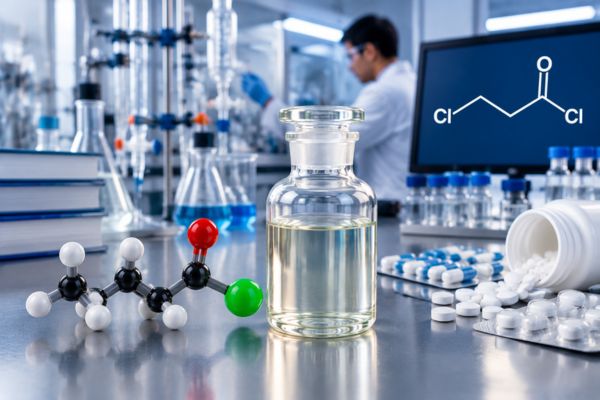
Why Pharma Manufacturers Depend on 4-Chlorobutyryl Chloride
4-Chlorobutyryl chloride is a powerful chemical intermediate that pharmaceutical companies worldwide depend on for synthesizing some of the most critical medications in modern medicine. With CAS number 4635-59-0, this reactive acid chloride serves as a key building block for antipsychotic drugs, quinolone antibiotics, antihistamines, and anticonvulsant medications. Its unique molecular structure allows chemists to efficiently introduce the 4-chlorobutyryl group into complex drug molecules.
Yet many pharmaceutical procurement teams face a frustrating problem. They need consistent, high-purity 4-chlorobutyryl chloride to maintain strict GMP compliance, but they struggle with suppliers who deliver inconsistent batches, lack proper analytical documentation, or cannot scale up during demand surges. These supply chain gaps directly impact drug production timelines and regulatory audit readiness.
This article explains exactly how 4-chlorobutyryl chloride is used in drug synthesis, what properties make it effective, and how to find a manufacturer you can count on. Whether you are formulating APIs or developing new drug candidates, this guide gives you the clarity you need.
Physical and Chemical Properties of 4-Chlorobutyryl Chloride
A solid understanding of 4-chlorobutyryl chloride properties helps pharmaceutical engineers design safe processes and achieve optimal reaction yields.
| Property | Value |
| Chemical Name | 4-Chlorobutyryl Chloride (4-Chlorobutanoyl Chloride) |
| CAS Number | 4635-59-0 |
| Molecular Formula | C₄H₆Cl₂O |
| Molecular Weight | 141.0 g/mol |
| Appearance | Colorless to yellowish liquid |
| Boiling Point | 170 to 173°C |
| Density | 1.27 g/mL at 25°C |
| Reactivity | Highly reactive with water, alcohols, and amines |
| Storage | Cool, dry place below 25°C |
| Purity (Pharma Grade) | 98% minimum |
The dual chlorine atoms in 4-chlorobutyryl chloride give it a distinctive reactivity profile. The acid chloride group enables rapid acylation, while the terminal chlorine allows subsequent cyclization and substitution reactions. This dual functionality is precisely what makes it so valuable in multistep drug synthesis.
Major Drugs Synthesized Using 4-Chlorobutyryl Chloride
The real impact of 4-chlorobutyryl chloride becomes clear when you look at the life-saving drugs it helps produce. Here are the most important pharmaceutical applications.
Haloperidol and Antipsychotic Medications
Haloperidol is one of the most prescribed antipsychotic drugs globally, used to treat schizophrenia, acute psychosis, and Tourette syndrome. 4-Chlorobutyryl chloride serves as a critical starting material in its synthesis, providing the four-carbon chain that forms part of the active molecular structure. Trifluoperidol, another antipsychotic, also relies on this intermediate.
Ciprofloxacin and Quinolone Antibiotics
Ciprofloxacin is one of the most widely used broad-spectrum antibiotics, prescribed for urinary tract infections, respiratory infections, and gastrointestinal conditions. 4-Chlorobutyryl chloride contributes to the synthesis pathway of ciprofloxacin and related quinolones like sparfloxacin.
Fexofenadine for Allergy Relief
Fexofenadine, the active ingredient in popular allergy medications, uses 4-chlorobutyryl chloride as a key intermediate in its manufacturing process. This non-drowsy antihistamine treats seasonal allergies and chronic hives, making this intermediate essential for consumer healthcare.
Levetiracetam for Epilepsy Treatment
Levetiracetam is a widely prescribed anticonvulsant used to manage epilepsy in both adults and children. 4-Chlorobutyryl chloride acts as a key starting material in its synthesis, underscoring its importance in neurological medicine.
How 4-Chlorobutyryl Chloride Works in Chemical Reactions
The power of 4-chlorobutyryl chloride in drug synthesis comes from its ability to participate in two distinct types of reactions within the same molecule.
Acylation Reactions
The acid chloride group reacts rapidly with amines and alcohols to form amide and ester bonds. This is the primary reaction used to attach the 4-chlorobutyryl group to aromatic ring systems and heterocycles in drug molecules.
Cyclization and Ring Closure
After the initial acylation step, the terminal chlorine atom allows intramolecular cyclization under controlled conditions. This forms lactam and pyrrolidone rings that are structural features of many pharmaceutical compounds.
Friedel-Crafts Acylation
In the presence of Lewis acid catalysts like aluminum chloride, 4-chlorobutyryl chloride undergoes Friedel-Crafts acylation with aromatic substrates. This reaction is fundamental to the haloperidol synthesis pathway.
Quality Parameters That Matter for Pharma Buyers
When sourcing 4-chlorobutyryl chloride for pharmaceutical manufacturing, certain quality parameters are non-negotiable.
| Quality Parameter | Acceptable Range | Why It Matters |
| Purity by GC | Minimum 98% | Ensures clean reactions with minimal side products |
| Moisture Content | Below 0.1% | Prevents premature hydrolysis and HCl generation |
| Color (APHA) | Below 50 | Indicates product freshness and absence of degradation |
| Acid Value | Within specification | Confirms no significant hydrolysis has occurred |
| Heavy Metals | Below 10 ppm | Required for pharma-grade applications |
Safe Handling Guidelines for Manufacturing Plants
Safety is paramount when working with 4-chlorobutyryl chloride in manufacturing environments. Follow these essential guidelines.
- Wear acid-resistant gloves, full-face shield, and chemical-resistant apron at all times
- Handle only under fume hoods or in facilities with dedicated scrubber systems
- Never transfer the material in open air or in the presence of moisture
- Store in cool, dry locations away from heat sources and incompatible chemicals
- Train all personnel on emergency spill response procedures including HCl neutralization
- Maintain detailed handling logs for regulatory compliance and audit readiness
Conclusion
4-Chlorobutyryl chloride is not just another item on your raw material list. It is a critical enabler for some of the most important medications, from antipsychotics and antibiotics to allergy treatments and epilepsy drugs. Securing a dependable supply of high-purity 4-chlorobutyryl chloride directly protects your production capacity, regulatory compliance, and ultimately patient safety.
Shital Chemical Industries manufactures pharmaceutical-grade 4-chlorobutyryl chloride at our facility in Gujarat, India. With rigorous in-house quality testing, proper documentation, and safe global logistics, we are the partner your pharma business can rely on. Contact us at sci@shitalchem.com to discuss your requirements.
Frequently Asked Questions
What drugs are made using 4-chlorobutyryl chloride?
Major drugs synthesized using 4-chlorobutyryl chloride include haloperidol (antipsychotic), ciprofloxacin (antibiotic), fexofenadine (antihistamine), and levetiracetam (anticonvulsant).
What is the CAS number of 4-chlorobutyryl chloride?
The CAS number of 4-chlorobutyryl chloride is 4635-59-0. Its chemical formula is C4H6Cl2O.
Is 4-chlorobutyryl chloride dangerous to handle?
Yes, it is corrosive and reacts vigorously with water. Proper PPE, ventilation, and moisture-free conditions are mandatory for safe handling in industrial settings.
What purity level is needed for pharmaceutical manufacturing?
A minimum purity of 98 percent by gas chromatography is typically required. Some API synthesis processes may need 99 percent or higher purity with certified heavy metal limits.
How is 4-chlorobutyryl chloride typically manufactured?
It is industrially produced by chlorinating gamma-butyrolactone using thionyl chloride or related chlorinating agents in the presence of catalysts like zinc chloride.
What packaging is recommended for bulk shipments?
HDPE drums or stainless steel containers with nitrogen blanketing are recommended. All packaging must comply with international dangerous goods shipping regulations.
Can I source 4-chlorobutyryl chloride from India for export?
Yes. Shital Chemical Industries in Gujarat, India, manufactures and exports 4-chlorobutyryl chloride to pharmaceutical companies worldwide. We handle all export documentation and comply with international safety standards.